





Built by the team transforming top commercial insurers, such as Amwins.
Built by the team transforming top commercial insurers, such as Amwins.
Built by the team transforming top commercial insurers, such as Amwins.
Built by the team transforming top commercial insurers, such as Amwins.
Built by the team transforming top commercial insurers, such as Amwins.
Bind more policies with the team you [i]have.[/i]
Bind more policies with the team you [i]have.[/i]
Bind more policies with the team you [i]have.[/i]
Bind more policies with the team you [i]have.[/i]
Bind more policies with the team you [i]have.[/i]
Win more of the right policies with faster quotes.
Win more of the right policies with faster quotes.
Win more of the right policies with faster quotes.
Win more of the right policies with faster quotes.
Win more of the right policies with faster quotes.
Agents keep every submission moving, so your brokers get a quote while other carriers are still chasing the loss runs.
Underwrite faster, with every figure tied to its source.
Underwrite faster, with every figure tied to its source.
Underwrite faster, with every figure tied to its source.
Underwrite faster, with every figure tied to its source.
Underwrite faster, with every figure tied to its source.
Agents read each submission on arrival and draft the worksheet, so your underwriters spend their time on the decision.
Grow your commercial book without growing headcount.
Grow your commercial book without growing headcount.
Grow your commercial book without growing headcount.
Grow your commercial book without growing headcount.
Grow your commercial book without growing headcount.
Agents carry the routine work across the pipeline, so each underwriter can quote more submissions with the same hours.
*Results from Praxent clients.
The engine sits on top of your policy admin system, rating engine and [i]CRM.[/i]
The engine sits on top of your policy admin system, rating engine and [i]CRM.[/i]
The engine sits on top of your policy admin system, rating engine and [i]CRM.[/i]
The engine sits on top of your policy admin system, rating engine and [i]CRM.[/i]
The engine sits on top of your policy admin system, rating engine and [i]CRM.[/i]
Your underwriters keep the systems they know. Agents read from them, and anything they write back waits for a person to approve it.
Watch the engine work a policy from submission to [i]bind.[/i]
Watch the engine work a policy from submission to [i]bind.[/i]
Watch the engine work a policy from submission to [i]bind.[/i]
Watch the engine work a policy from submission to [i]bind.[/i]
Watch the engine work a policy from submission to [i]bind.[/i]
Agents work the pipeline, and your underwriters approve every [i]decision.[/i]
Agents work the pipeline, and your underwriters approve every [i]decision.[/i]
Agents work the pipeline, and your underwriters approve every [i]decision.[/i]
Agents work the pipeline, and your underwriters approve every [i]decision.[/i]
Agents work the pipeline, and your underwriters approve every [i]decision.[/i]
Agents read submissions, screen them against appetite, draft the worksheet, check quotes against authority and track subjectivities before binding. Each one is built on your carrier's own process, policies and templates.
Reads every submission as it arrives.
Reads every submission as it arrives.
Reads every submission as it arrives.
Reads every submission as it arrives.
Reads every submission as it arrives.
The agent reads each broker email and file that lands in the submission folder, pulls the application, statement of values and loss runs, and checks them against your list. Missing items get requested from the broker.
Submissions reach underwriting complete and sooner.
Screens every submission against your appetite.
Screens every submission against your appetite.
Screens every submission against your appetite.
Screens every submission against your appetite.
Screens every submission against your appetite.
The agent checks each account and location against your guidelines: TIV, protection class, sprinklers, flood zone, occupancy and loss ratio, and flags where documents disagree.
Underwriters see the issues before they start.
Drafts the worksheet in your format.
Drafts the worksheet in your format.
Drafts the worksheet in your format.
Drafts the worksheet in your format.
Drafts the worksheet in your format.
The agent writes the worksheet from your template, with rating, loss experience and appetite flags, every figure linked to its source. Your underwriter reviews, edits and decides.
Decision-ready worksheets in a fraction of the time.
Checks every quote before it goes to the broker.
Checks every quote before it goes to the broker.
Checks every quote before it goes to the broker.
Checks every quote before it goes to the broker.
Checks every quote before it goes to the broker.
The agent compares the quote with the worksheet, your guidelines and the underwriter's authority: limits, deductibles, rate, forms, exclusions and conditions. It never issues a quote. Your team does.
Authority breaches caught before the quote goes out.
Tracks every quote through to bind.
Tracks every quote through to bind.
Tracks every quote through to bind.
Tracks every quote through to bind.
Tracks every quote through to bind.
The agent tracks subjectivities, preps the bind request and flags quotes before they expire, then drafts the broker follow-up while there's still time to win the account.
More quotes bound and fewer lost to the calendar.
Watch the agents work the pipeline and approve every decision.
Watch the agents work the pipeline and approve every decision.
Watch the agents work the pipeline and approve every decision.
Watch the agents work the pipeline and approve every decision.
Watch the agents work the pipeline and approve every decision.
Underwriters see the agents working the pipeline in a dashboard and approve every decision. Each approval shows the inputs, sources and confidence behind it.
Underwriters spend their day on brokers and risk calls.
Stop teaching your competitors how to underwrite like [i]you.[/i]
Stop teaching your competitors how to underwrite like [i]you.[/i]
Stop teaching your competitors how to underwrite like [i]you.[/i]
Stop teaching your competitors how to underwrite like [i]you.[/i]
Stop teaching your competitors how to underwrite like [i]you.[/i]
Software vendors
Software vendors
Software vendors
Software vendors
Software vendors
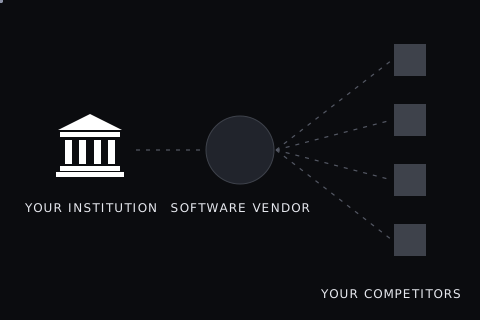
Your expertise trains their product.
Your expertise trains their product.
Your expertise trains their product.
Your expertise trains their product.
Your expertise trains their product.
Every policy you write improves a vendor's model. They sell it to your competitors at full price.
Your carrier on AgentCommand[sm]
Your carrier on AgentCommand[sm]
Your carrier on AgentCommand[sm]
Your carrier on AgentCommand[sm]
Your carrier on AgentCommand[sm]
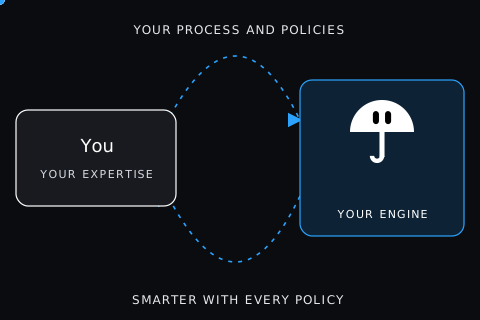
Your expertise compounds for you.
Your expertise compounds for you.
Your expertise compounds for you.
Your expertise compounds for you.
Your expertise compounds for you.
Every decision stays in engines you own, in your cloud. The advantage builds every quarter, and nobody else gets it.
Turn decades of underwriting expertise into proprietary agents, with every policy building intelligence your competitors can't [i]buy.[/i]
Turn decades of underwriting expertise into proprietary agents, with every policy building intelligence your competitors can't [i]buy.[/i]
Turn decades of underwriting expertise into proprietary agents, with every policy building intelligence your competitors can't [i]buy.[/i]
Turn decades of underwriting expertise into proprietary agents, with every policy building intelligence your competitors can't [i]buy.[/i]
Turn decades of underwriting expertise into proprietary agents, with every policy building intelligence your competitors can't [i]buy.[/i]

Underwriting growth
Underwriting growth
Underwriting growth
Underwriting growth
Underwriting growth
Brokers place business with the market that quotes first. Faster quotes win more of the right policies, and every policy you write grows your underwriting profit.

Proprietary agents
Proprietary agents
Proprietary agents
Proprietary agents
Proprietary agents
Turn decades of your institutional underwriting expertise into proprietary agents that enable you to decouple underwriting growth from underwriter headcount.
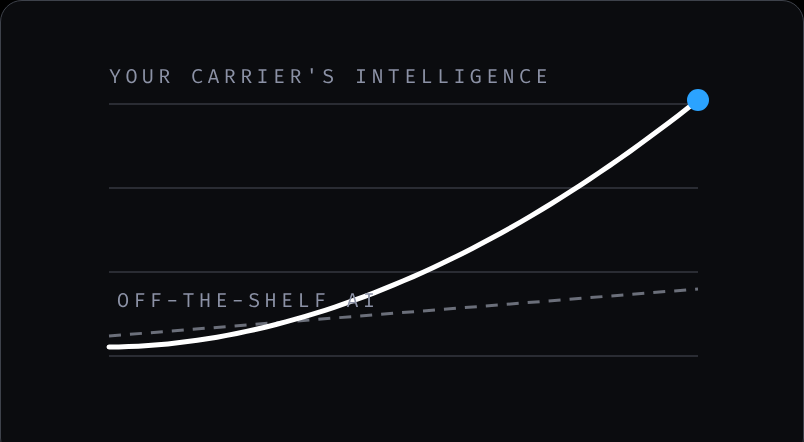
Compounding competitive value
Compounding competitive value
Compounding competitive value
Compounding competitive value
Compounding competitive value
Every underwriting decision makes your carrier smarter, creating advantage your competitors can't buy.
Built for every line in your commercial [i]book.[/i]
Built for every line in your commercial [i]book.[/i]
Built for every line in your commercial [i]book.[/i]
Built for every line in your commercial [i]book.[/i]
Built for every line in your commercial [i]book.[/i]
Each line gets agents shaped to its own submissions, appetite checks and binding conditions.
Commercial property
Commercial property
Commercial property
Commercial property
Commercial property
Statements of values, COPE data, cat exposure and protection class against appetite.
General liability
General liability
General liability
General liability
General liability
Class codes, exposure bases, loss runs and contractual risk transfer.
Commercial auto
Commercial auto
Commercial auto
Commercial auto
Commercial auto
Driver schedules, MVRs, vehicle lists and fleet loss history.
Workers' comp
Workers' comp
Workers' comp
Workers' comp
Workers' comp
Payroll by class code, experience mods and state rules.
Umbrella and excess
Umbrella and excess
Umbrella and excess
Umbrella and excess
Umbrella and excess
Underlying schedules, attachment points, tower structure and limits.
Business owner's policy
Business owner's policy
Business owner's policy
Business owner's policy
Business owner's policy
Eligibility, package limits and fast small business quotes.
Inland marine
Inland marine
Inland marine
Inland marine
Inland marine
Equipment schedules, cargo values and transit exposure.
Professional liability
Professional liability
Professional liability
Professional liability
Professional liability
Applications, revenue by practice area, prior acts and claims history.
Management liability
Management liability
Management liability
Management liability
Management liability
Financial statements, D&O and EPL questionnaires and claims history.
Cyber
Cyber
Cyber
Cyber
Cyber
Security controls questionnaires, revenue, records held and incident history.
Start with commercial underwriting and extend to any financial [i]workflow.[/i]
Start with commercial underwriting and extend to any financial [i]workflow.[/i]
Start with commercial underwriting and extend to any financial [i]workflow.[/i]
Start with commercial underwriting and extend to any financial [i]workflow.[/i]
Start with commercial underwriting and extend to any financial [i]workflow.[/i]
The Commercial Lines Underwriting Engine runs on AgentCommand[sm], Praxent's agent accelerator. AgentCommand[sm] can be extended to add new engines and power any financial workflow your institution wants to tackle.
Commercial Lines Underwriting Engine
Life and Annuity New Business Engine
MGA Program Oversight Engine
Commercial Claims Engine
Workers’ Compensation Claims Engine
Group Underwriting Engine
Payment Integrity and Pharmacy Audit Engine
BSA/AML Engine
Specialty insurance broker puts AI agents on its core broker platform to [i]halve operations[/i] cost.
Specialty insurance broker puts AI agents on its core broker platform to [i]halve operations[/i] cost.
Specialty insurance broker puts AI agents on its core broker platform to [i]halve operations[/i] cost.
Specialty insurance broker puts AI agents on its core broker platform to [i]halve operations[/i] cost.
Specialty insurance broker puts AI agents on its core broker platform to [i]halve operations[/i] cost.
A fast-growing broker is moving policy processing, broker accounting, claims and onboarding onto Claude agents that operate the same screens its people do, years ahead of any core system replacement.

Your team governs every decision, and it all runs in your [i]cloud.[/i]
Your team governs every decision, and it all runs in your [i]cloud.[/i]
Your team governs every decision, and it all runs in your [i]cloud.[/i]
Your team governs every decision, and it all runs in your [i]cloud.[/i]
Your team governs every decision, and it all runs in your [i]cloud.[/i]
Agents suggest and your team approves.
Agents suggest and your team approves.
Agents suggest and your team approves.
Agents suggest and your team approves.
Agents suggest and your team approves.
Nothing is auto-approved below 0.90 confidence, and every step is logged with its inputs, sources, model, confidence, rule and approver, which also gives you a head start on model-risk documentation.
Suggests the action
Below 0.90 confidence goes to a person
Approves, edits or rejects
Your cloud, your agents, your decision records.
Your cloud, your agents, your decision records.
Your cloud, your agents, your decision records.
Your cloud, your agents, your decision records.
Your cloud, your agents, your decision records.
Claude through your existing Azure AI Foundry resource
OpenID Connect, tested with Entra ID
Append-only event log with tamper-resistant tables
OpenTelemetry to Application Insights
Share the engine with your chief underwriting officer and your [i]CIO.[/i]
Share the engine with your chief underwriting officer and your [i]CIO.[/i]
Share the engine with your chief underwriting officer and your [i]CIO.[/i]
Share the engine with your chief underwriting officer and your [i]CIO.[/i]
Share the engine with your chief underwriting officer and your [i]CIO.[/i]

Commercial Lines Underwriting Engine one-pager
Commercial Lines Underwriting Engine one-pager
Commercial Lines Underwriting Engine one-pager
Commercial Lines Underwriting Engine one-pager
Commercial Lines Underwriting Engine one-pager
What it does, the outcomes for your underwriters and the specialty broker proof, on one page for your next leadership meeting.
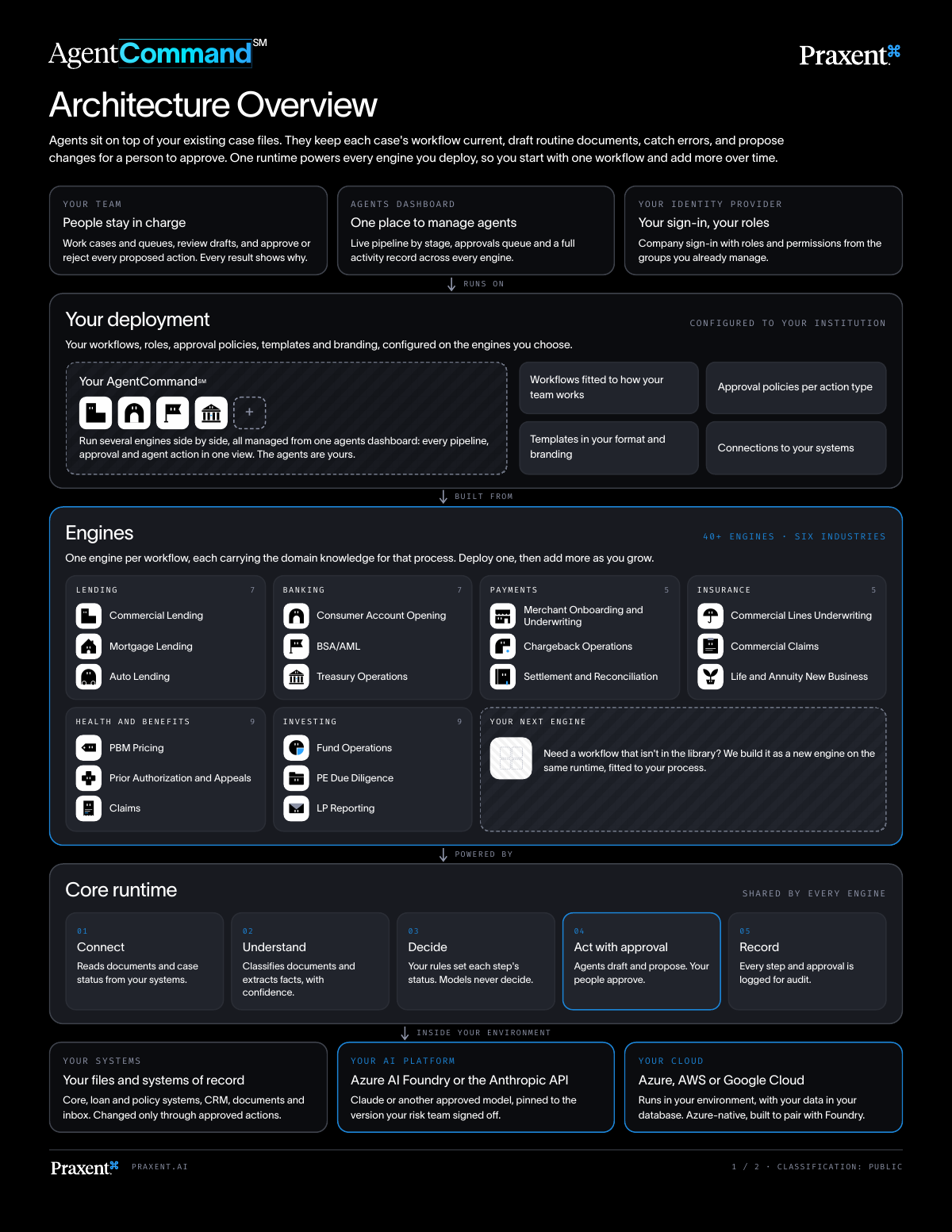
AgentCommand[sm] tech specs
AgentCommand[sm] tech specs
AgentCommand[sm] tech specs
AgentCommand[sm] tech specs
AgentCommand[sm] tech specs
Architecture, deployment, approval policies, audit tables and model access, for your CIO, head of AI and security team.