







3 Simple Ways to Manage Work Stress (Plus 5 Biggest Stressors)
Product leaders Deanna Dial and Mark Power-Freeman surveyed over 20 participants in product creation roles to uncover insight about how to manage work stress.

What stresses you out the most at work?
How often do you feel stressed?
What do you do to manage stress?
What days of the week are most stressful?
Over 20 participants responded to these and other questions about work related stress and time management. The resulting analysis provides a clearer understanding about what causes stress as well as some recommendations for pro-actively avoiding burnout.
Most Common Work-Related Stressors
Motivated by the joy of creating products that make an impact, survey participants seemed to love their work; yet, Mark and Deanna discovered that stress touches every aspect of survey participants’ lives.
That’s probably because we tend to stress about things we care about. Stress at work is connected to a deep care participants have about both their jobs and their lives outside of work.
The people Deanna and Mark surveyed reported the following five most common work-related stressors:
1. Striving for quality is more stressful than just checking boxes.
2. Concern over interpersonal relationships at work causes stress.
3. It's stressful trying to fit everything in.
4. Anxiety is caused by a fear of missing out on life outside of work.
5. Contending with distractions like emails, meetings and off-topic requests compounds stress.
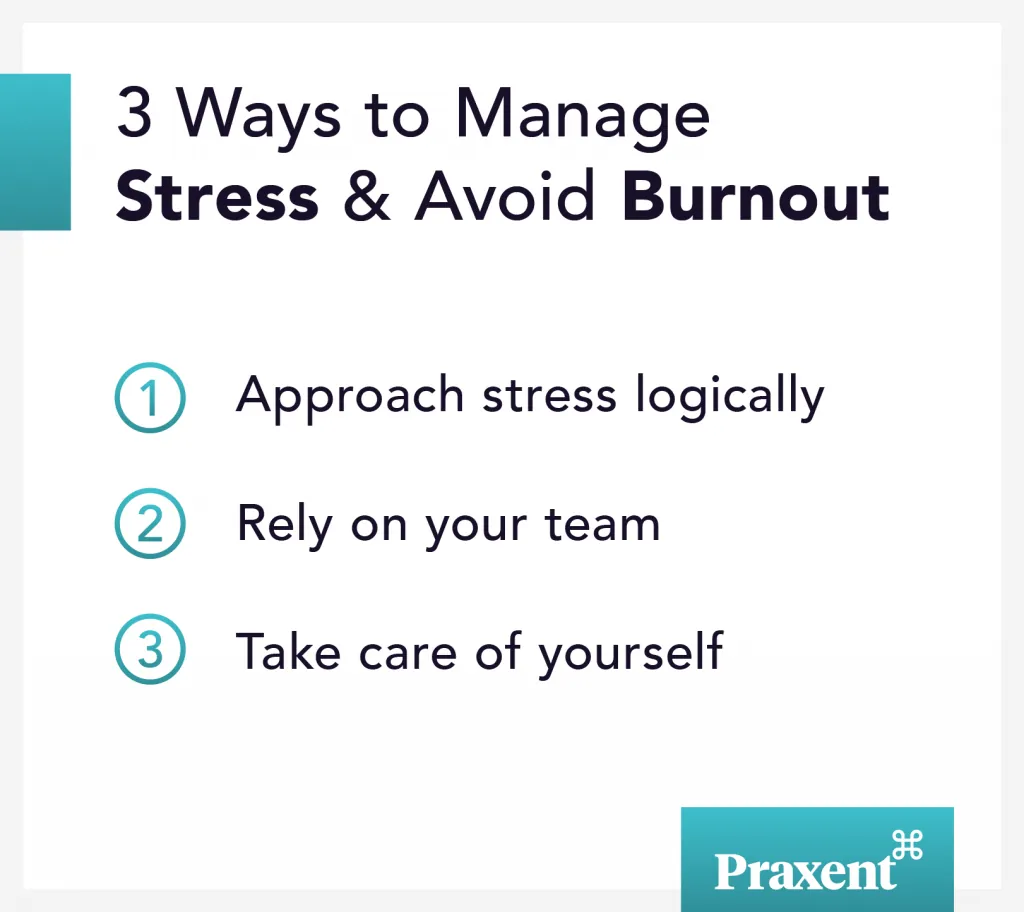
After compiling and analyzing survey results, Mark and Deanna identified three simple keys to work through those concerns, manage work stress and stay sane:
1. Approach stress logically.
2. Rely on your team.
3. Take care of yourself.
1. Approach Stress Logically
When really stressed at work, it’s important to reign in your thoughts and think things through logically. While valid concerns may be causing you to worry, allowing anxiety to take over won’t help you move forward.
Emotionally detach from the situation that's causing you stress.
(Remember, it’s just work.)
Consider the worst case scenario and be grateful for the positive.
(See? It’s not so bad!)
Look at the situation from another perspective.
How would another teammate or client perceive the situation? If you were on the outside, looking in, would the problem seem like a big deal? Maybe it’s not as bad as you think.
Separate emergencies from actual priorities.
(Don’t assume everything is an emergency just because someone tells you it’s urgent.)
Trust your decision making.
Doubting your decisions during stress only makes it worse. Make a decision and move forward.
Focus on priorities.
Clearly outline the things that are stressing you out. Which of those matter and which don’t? Take care of the priorities and don’t stress about the less important items.
2. Rely on Your Team
Here are some ways teams can help each other manage work stress:
Lean on your teammates for problem solving, prioritizing and even sharing the load.
Allow your leaders and managers to resolve stressful situations for you so that you can keep getting your work done.
Continually congratulate each other for jobs well done.
Confide in your teammates about the things causing you stress.
Talking things out is key to approaching stress logically and moving forward with solutions.
3. Take Care of Yourself
You can't manage work stress without effective time management. Evaluate your week and adjust the way you allocate time. Here are some changes that could help if you’re feeling stressed and overwhelmed:
Start earlier.
Incorporate physical activity into your workday.
Play board games throughout the week.
Prioritize enough healthy foods during the week, not just on weekends.
Protect off hours. Don’t allow yourself to work after hours or on the weekend.
Intentionally spend more time with your family.
If you work during off hours, make sure you’re getting compensated for it.